
Climate Change - When climate change comes doorstep
When it comes to climate change, we often make the mistake of thinking that this problem will have no effect on our lives today, but that is not the case. We perceive global temperature increases of one or two degrees, melting ice caps, and sea level rises of a few centimeters as distant problems that do not affect our health, economy, and leisure time. In this article, we will tell you some evidence that global warming of the planet is already occurring and impairing our quality of life. Recognizing that climate change is a real problem, right here, right now, Santander plans to be a zero-emissions bank by 2050.

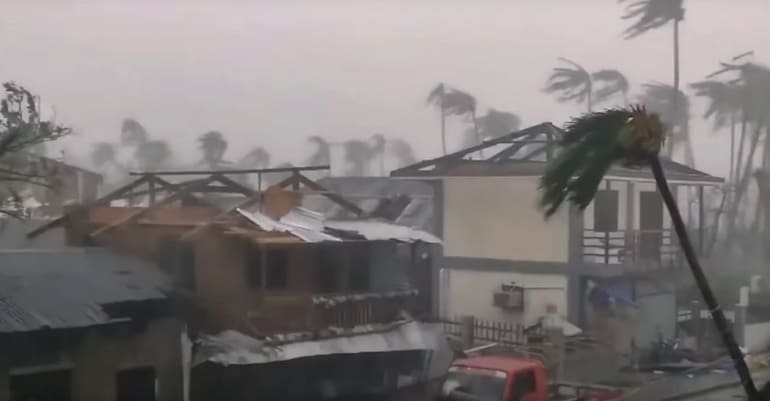
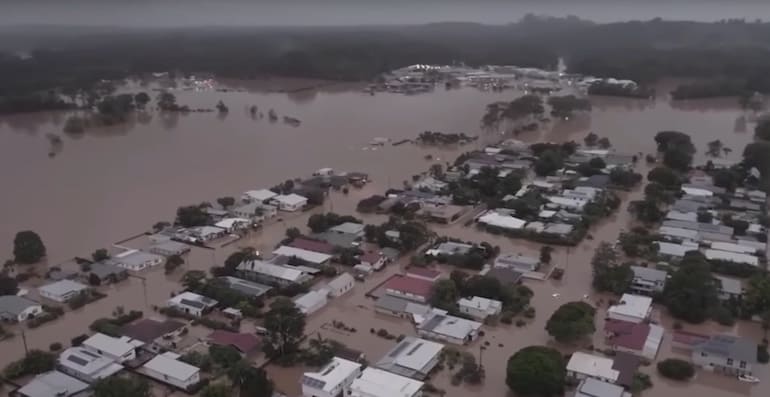
We are now at the dawn of the Great Climate Migration era in America. So far, it has been piecemeal, and the moves are often temporary. Residents of Lake Charles, Las Vegas, affected by hurricanes, floods and winter storms have been staying with relatives for months. In early August, the Dixie Fire, the largest fire in California history, swept away at least an entire town, and local residents began living in tents. Residents of apartment buildings in Lynn Haven, Florida, were forced to leave their homes and wade through streets flooded by Tropical Storm Fred. The number of evacuees continues to grow, from New Englanders in the path of Hurricane Henri to flood victims in North Carolina and Tennessee to people fleeing fires in Montana and Minnesota.
Why do we only take action when climate change comes to our doorstep?
Without realizing it, we all suffer in our daily lives as a direct or indirect result of climate change, an impact that makes life harder and even hinders our ability to engage in activities with the same freedom we enjoyed a few years ago. An article by Global Citizen, a global civic movement created in 2012 to end extreme poverty by 2030 and advocate for the planet, cites several examples:
But the permanent relocation of both individuals and entire communities is increasingly unavoidable.
Climate-related disasters have become such a pervasive threat to our homes that the real estate brokerage firm Redfin recently introduced a rating system that assesses climate risk down to the zip code. In the U.S., the Internal Displacement Monitoring Center found 1.9 million disaster-related displacements in 2022 alone.
- More intense allergic reactions and at times of the year when they did not occur before. The increase in the number of hot days of the year and the earlier onset of the warm season, as well as air pollution and particulate pollutants, is a cocktail that complicates the pathologies of existing allergies and causes allergies in people who have not had them before.
- Increasingly scarce and expensive foods. Over the past century, supermarkets in many parts of the world have become places of super abundance, where you can buy food from all over the world, regardless of the growing season. But this era of convenience is coming to an end as climate change disrupts global food production. Soon it may be difficult to find or afford staple crops like rice and wheat, fruits like peaches and cherries, and seafood like sardines and scallops.
- We've gotten worse sleep. Approximately 77% of people around the world believe they don't sleep well. This is data for 2020, before the pandemic began, so we can't attribute this decline to COVID-19-induced stress. The cause? First of all, rising temperatures: in the hottest months, there are many more nights when you can't sleep. This is a direct cause, but there are also indirect causes, such as anxiety among those who suffer from fires, hurricanes and other natural disasters. If the number of these devastating events is increasing, it is accompanied by an increase in the number of people experiencing this kind of stress and trying to sleep.
- The ever-increasing cost of housing. Climate change is also taking a toll on our pockets, whether we rent or buy. Construction now also accounts for the increase in adverse climate impacts and disasters, while the costs associated with construction and even home insurance are on the rise.
- Increasing traffic congestion. Climate change affects us when we travel by car, and we have to endure more and more traffic jams. Why is this happening? As weather patterns become more erratic, materials and transportation infrastructure are under increasing strain. And what happens when a road, bridge or tunnel has problems? Road conditions worsen until the road is repaired.
- We lose natural spaces. High temperatures, lack of rainfall, and desertification deprive areas of rainfall. This means that river levels in these areas are dropping, causing lakes, ponds, and wells to dry up and even disappear in some places. The consequences for the environment are obvious, as well as for people who have fewer and fewer places to visit in the summertime to cool off, deal with the heat, and enjoy nature.
Relocating safely and effectively from vulnerable areas more than temporarily remains a major challenge for most Americans. As the U.S. Government Accountability Office concluded in its 2020 report, "unclear federal leadership is a key challenge to climate migration as a strategy for building resilience.
Increasingly, indigenous peoples, community-based organizations, local governments, universities, and other organizations are trying to fill this leadership gap. They have developed innovative resettlement plans and tools for cities and towns looking for solutions. In the aftermath of Hurricane Ida, which became the fifth worst hurricane to hit the United States, the federal government should make climate migration a viable option for everyone.
Real change - such as relocating entire neighborhoods and communities from dangerous places
Is far better done not during a crisis, when displaced people must weigh difficult decisions in the midst of chaos and loss, but before a crisis strikes.
In August, the Biden administration increased funding for communities before the disaster struck. This included doubling the budget to $1 billion for the Federal Emergency Management Agency's program to strengthen vulnerable communities; some experts are calling for more. Others, similar budget increases that could support resettlement projects, are included in a pending congressional infrastructure bill.
If the United States wants to adapt safely to a warming climate, a more robust and concrete plan is needed.
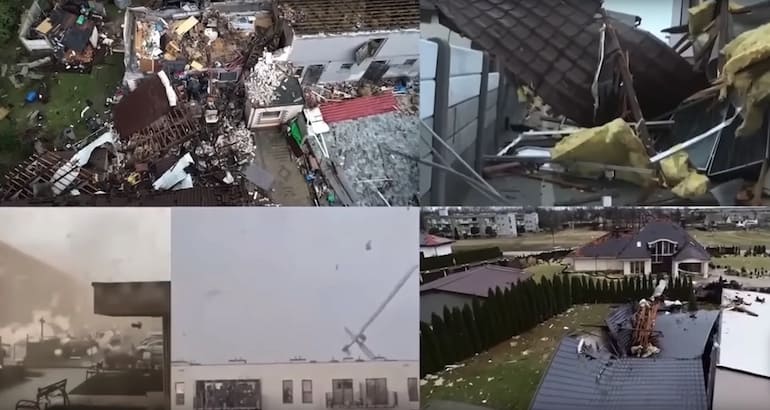
Climate change is the long-term change in temperature and typical weather conditions in a particular place. Climate change can refer to a specific place or to the planet as a whole. Climate change can cause weather conditions to become less predictable. Such unpredictable weather patterns can make it difficult to maintain and grow crops in regions that depend on agriculture because expected temperature and precipitation levels can no longer be relied upon. Climate change is also associated with other devastating weather events, such as more frequent and more intense storms, flooding, heavy rains, and winter storms.
Meanwhile, some communities have begun to address the problems themselves. In the city of Paradise, California, which lost 11,000 homes to the record-breaking 2018 Camp Fire, the Paradise Recreation and Park District began a fire buyout program, buying up hundreds of acres of the riskiest properties from those willing to sell.
In coastal Alaska, 15 Alaska Native villages worked with the Alaska Justice Institute to develop a culturally sensitive community relocation process. This includes naming "estec" the rapid erosion and melting of permafrost caused by climatic factors - at a rate of 10 feet in one night - causing buildings to fall into the sea. In Yup'ik indigenous language, ustek means "catastrophic landfall," and several villages have installed ustek monitoring devices. By collecting regular data and defining land loss as a natural disaster rather than natural erosion, villages are building a legal case that ustek should be recognized as a federal hazard that entitles them to resettlement funding.
Right now, it's not - and it's not an option everyone would make. Recently released Census Bureau data shows that Americans are mostly moving to risky areas: the drought-stricken West, the hurricane-prone South. In this crucible of ill-informed decision-making and inflamed climate, experts have begun pushing for a coordinated, equity-based effort to promote voluntary climate migration and relocation.
In its report, the Government Accountability Office recommended a federal pilot program for "community-led" climate migration. In this direction, the Biden administration could take creative local approaches and support them.
Climate change is a long-term change in global or regional climate patterns. Often climate change refers specifically to the rise in global temperatures from the mid-20th century to the present.
In the United States, efforts to relocate families or even entire neighborhoods have been largely supported by federal buyout programs. After disasters such as hurricanes and floods, state and local governments can buy back damaged homes with federal funds. Homeowners can then relocate instead of rebuilding. In coastal communities where residents move away from the water's edge, this process is called managed retreat.
Unfortunately, all of this is ad hoc; homeowners continually face mazes of bureaucracy and years of delays in getting a buyout. And because programs can include relocation incentives within a certain geographic area, homeowners can find themselves in places just as vulnerable to climate hazards. That's not to mention renters, who might just lose everything in the event of a disaster.
Some community activists across the country are suggesting that the Citizens Climate Corps, which the Biden administration has promised to create as part of its jobs plan - modeled on the New Deal Citizens Conservation Corps, which has created thousands of infrastructure and park projects - could build housing for people displaced by climate change.
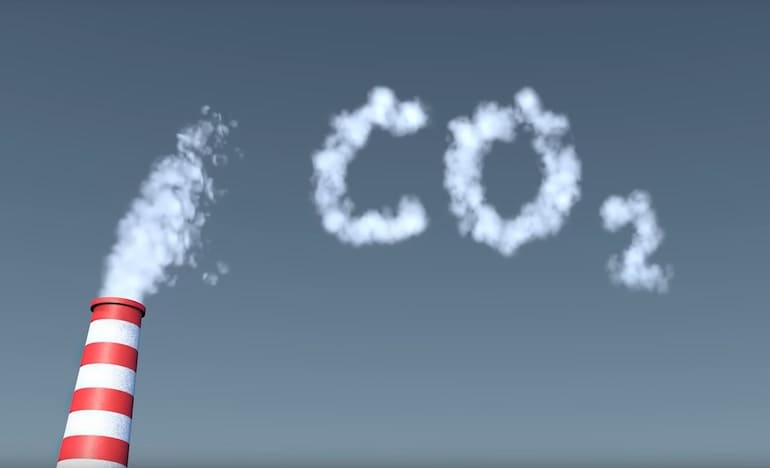
Much of today's climate change is caused by human activities, such as the burning of fossil fuels like natural gas, oil and coal. When these materials are burned, so-called greenhouse gases are released into the earth's atmosphere. There, these gases trap heat from the sun's rays inside the atmosphere, causing the Earth's average temperature to rise. This increase in the planet's temperature is called global warming. The warming of the planet affects local and regional climate. Throughout Earth's history, the climate has been constantly changing. When it happens naturally, it is a slow process that takes hundreds or thousands of years. Human-influenced climate change, which is happening now, is much faster.
Most recently, grassroots leaders called on the president to create a climate migration agency. These leaders - representatives of low-income, black, Latino and indigenous communities from South Carolina to California - met during 2022 to discuss how climate change is shaping the uncertain places they call home. They hope that federal relocation money and information will be readily available for all to leave home and find a new one was not a disaster than it should be.
Remember that climate change is up to each and every one of us, so together we can save the planet!